Purpose of the Workflow
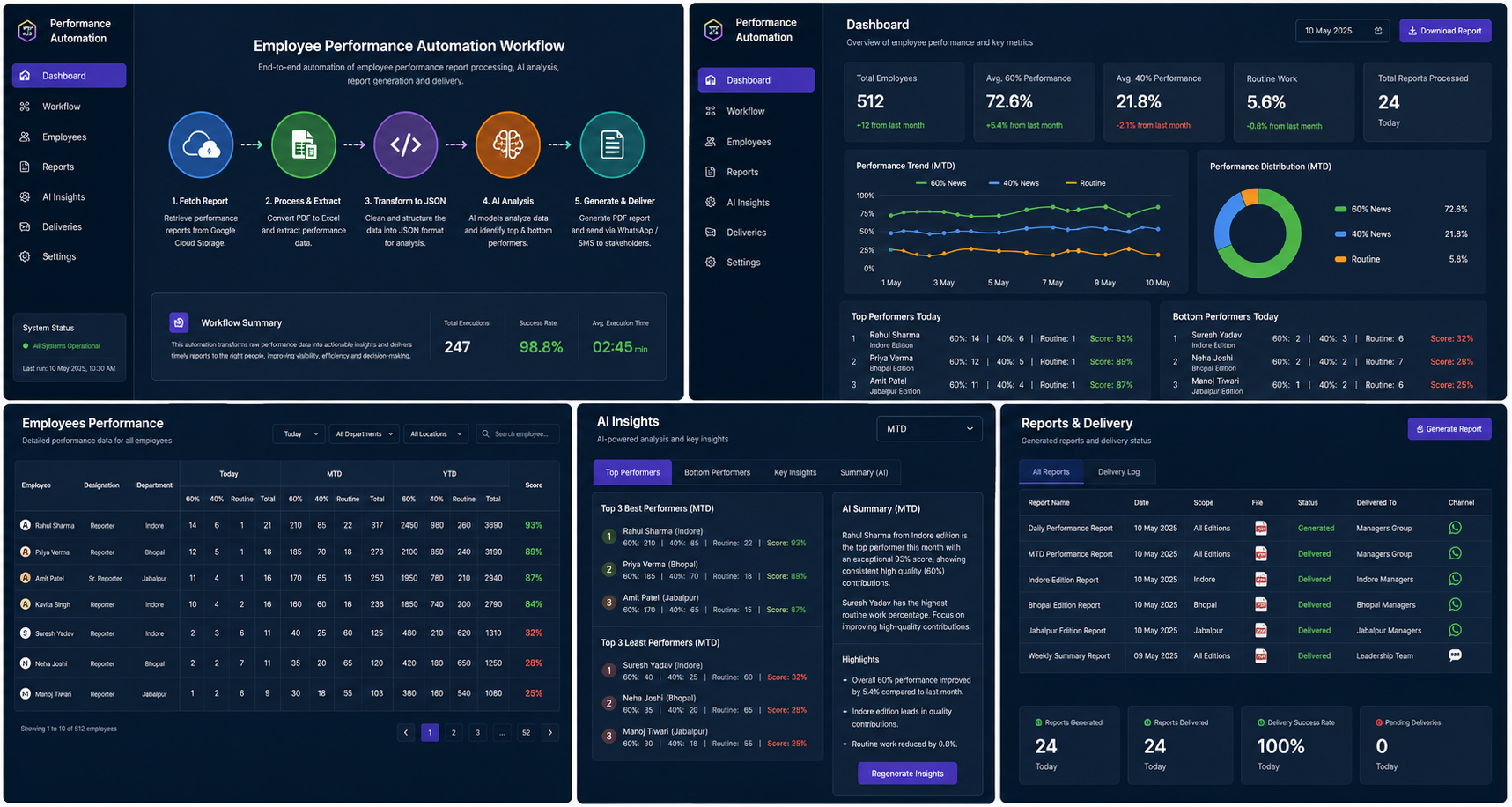
The workflow is designed to automate employee performance reporting with consistency, accuracy, and speed. It replaces fragmented spreadsheet handling and repetitive report preparation with a governed automation layer.
How Files Are Fetched from Google Cloud Storage
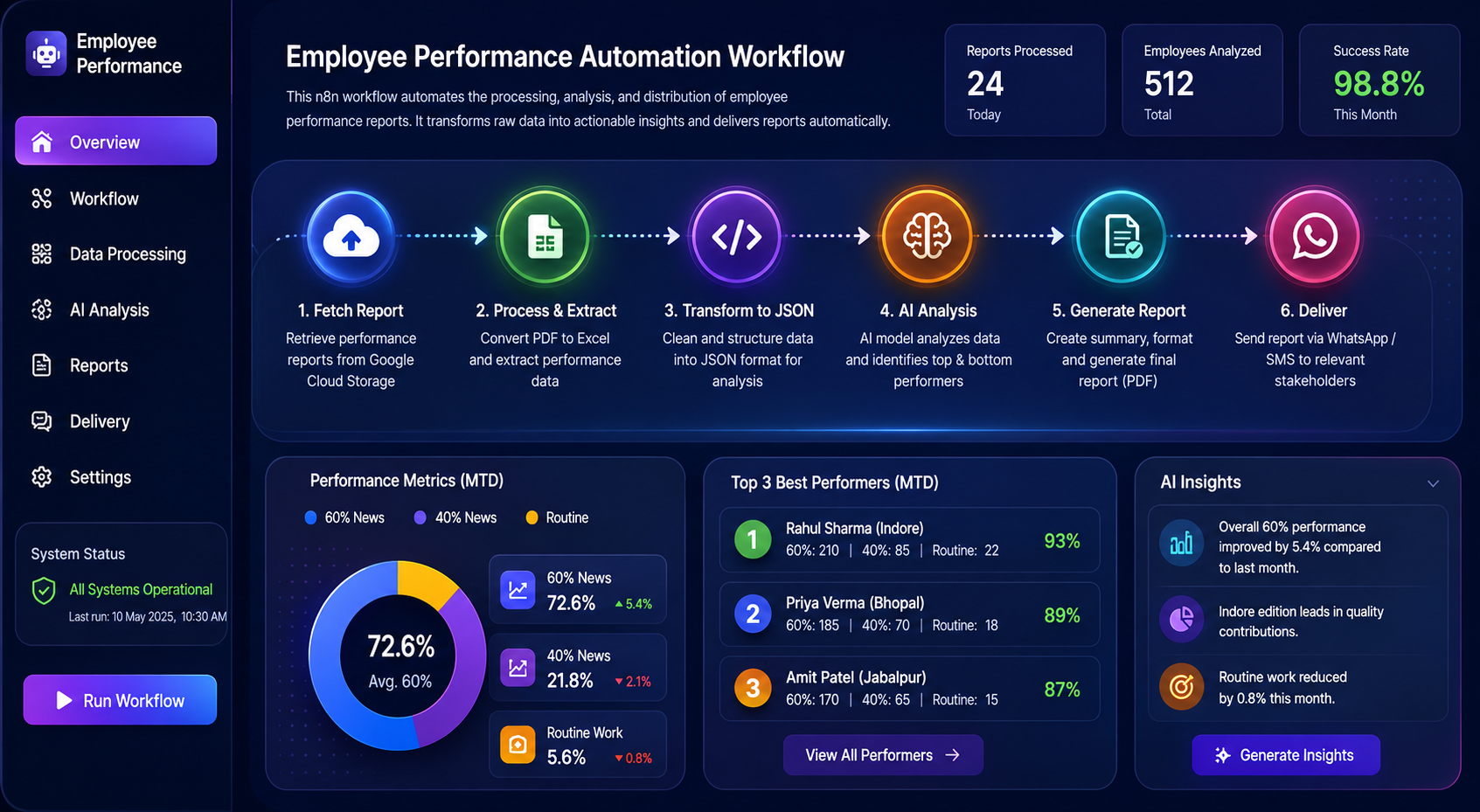
n8n monitors or retrieves source files from Google Cloud Storage buckets based on reporting schedules, naming conventions, or folder logic. This ensures the automation always works from the latest approved inputs.
How Employee Performance Data Is Processed
Incoming files are classified, validated, and routed into the correct extraction path. The system handles performance PDFs, spreadsheet exports, and structured attachments while maintaining traceable execution across each report cycle.
How PDF Reports Are Converted into Structured Data
PDF Processing and ConvertAPI are used to transform report files into machine-readable content. Where needed, XLSX Extraction is applied to tabular exports so operational metrics remain intact during conversion.
How the System Transforms Data into JSON
JavaScript transformation nodes normalize extracted fields into JSON objects. This creates a clean, predictable schema that downstream logic can use for calculations, model prompts, routing decisions, and report assembly.
How Today, MTD, and YTD Metrics Are Extracted
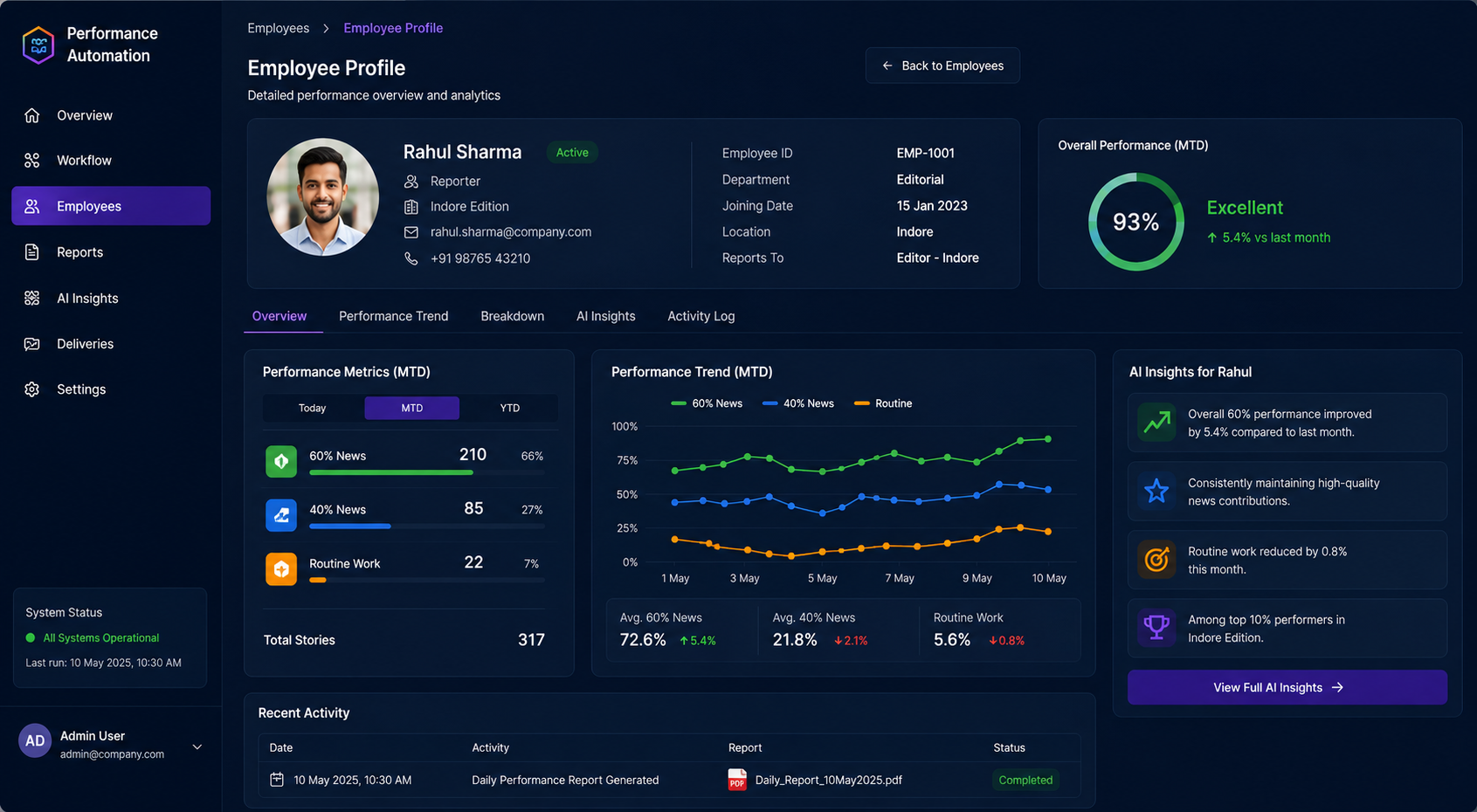
The workflow calculates and maps Today, Month-To-Date, and Year-To-Date performance metrics from the normalized dataset. KPI windows are aligned to reporting rules so operational leaders can compare current output with cumulative trends.
How AI Analyzes Employee Performance
OpenAI and Google Gemini are used to interpret metrics, identify meaningful performance patterns, and explain movement across KPIs. This layer adds contextual analysis rather than only presenting raw numbers.
How Top and Bottom Performers Are Identified
Ranking logic compares employees against configured scorecards, thresholds, and variance rules. The automation highlights top performers, low performers, and outliers for management review without requiring manual sorting.
How Summaries Are Generated Using AI Models
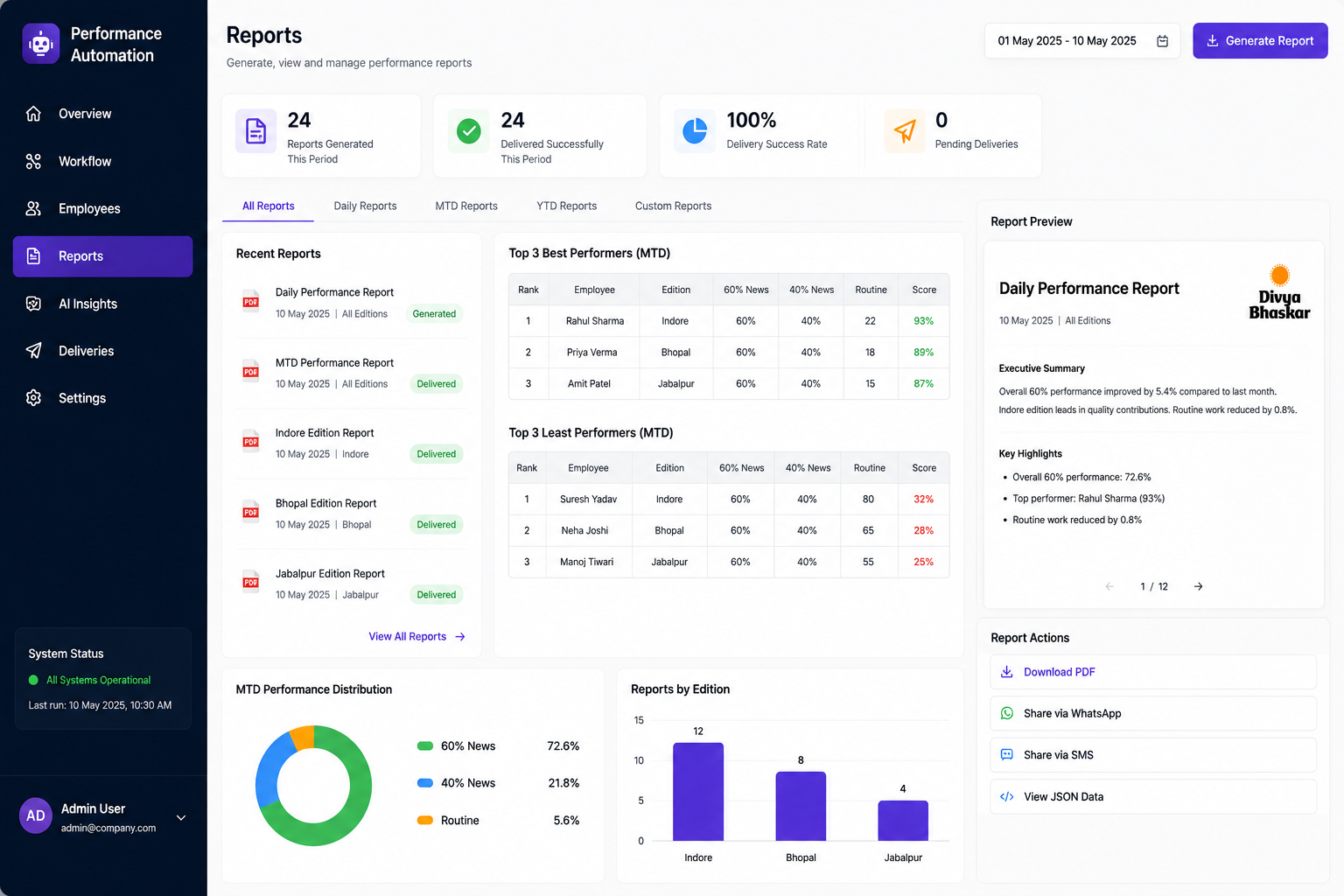
AI models generate executive summaries, employee-level observations, and manager-friendly narrative outputs. The resulting commentary is concise, structured, and suitable for enterprise reporting workflows.
How Final Reports Are Created in PDF Format
Once analysis is complete, the system renders formatted report payloads into branded PDF outputs. This provides a consistent, distributable document for leadership teams, operations, and department heads.
How Reports Are Distributed Using WhatsApp and SMS APIs
REST APIs connect the workflow to WhatsApp API and SMS Gateway APIs so final reports can be pushed automatically to stakeholders. Distribution rules can support instant delivery, scheduled dispatch, and escalation-based messaging.
How Conditional Routing Works by Department and Location
The automation applies conditional routing logic to determine which teams receive which reports. Department, location, role, or reporting hierarchy can all be used to send tailored outputs to the correct audience.